
TokenPost.ai
Ethereum (ETH) should be understood less as a speculative ‘coin’ and more as the ‘operating system’ for next-generation finance, Fundstrat co-founder Tom Lee told attendees at WebX 2026 in Tokyo on Monday, arguing that the network could become the settlement backbone for stablecoins, tokenized real-world assets, and emerging AI-driven commerce.
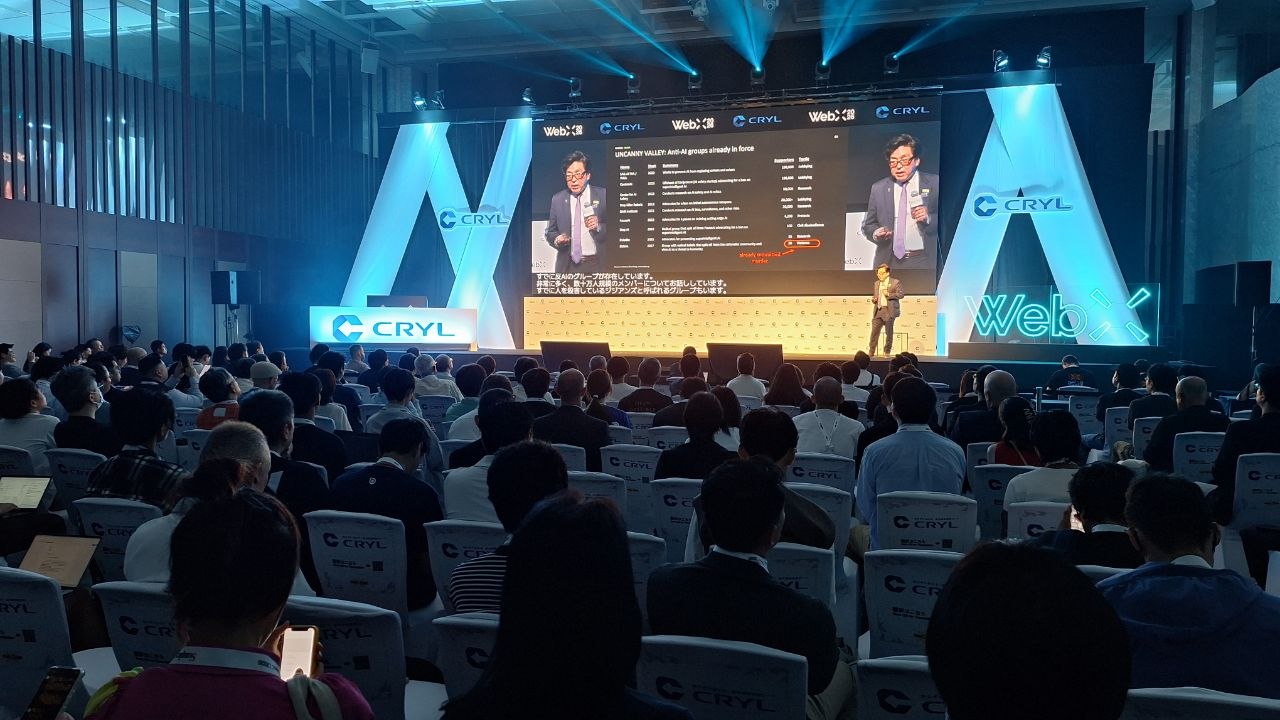
Lee—also chairman of the board at BitMine Immersion Technologies—delivered a special keynote shortly after the opening ceremony at The Prince Park Tower Tokyo, outlining what he framed as a structural shift in how money and assets will move over the coming decade. Rather than focusing on price targets, he posed a broader question: which network will underpin the circulation of global capital as payments become programmable and asset ownership becomes token-based.
According to the official WebX 2026 agenda, Lee’s keynote ran for 30 minutes beginning at 11:25 a.m. Japan time (2:25 a.m. UTC). He was also scheduled to join an afternoon discussion focused on corporate adoption under the theme “Ethereum on the Corporate Balance Sheet: A New Treasury Strategy.”
At the core of Lee’s thesis is a division of labor between Bitcoin (BTC) and Ethereum. “If Bitcoin is ‘digital gold,’ Ethereum is the rails of the digital economy,” he said, describing BTC as a scarce, censorship-resistant store of value, while positioning Ethereum as an execution layer for contracts and settlement—where payments, securities transfers, and automated financial logic can occur on the same network.
The difference matters for corporates, he argued, because an Ethereum-based treasury is not simply about holding an asset in cold storage. Companies can stake ETH to participate in network validation and earn rewards, turning what would otherwise be idle balance-sheet exposure into productive capital tied to the growth of on-chain activity. In that framing, ETH holdings become not only a bet on appreciation but also a mechanism for recurring yield and infrastructural participation in decentralized finance and tokenized markets.
Tokenization as a Wall Street demand driver
Lee identified ‘tokenization’—the migration of traditional financial claims onto blockchain rails—as the first major structural catalyst. Today’s markets still rely on fragmented ledgers and settlement systems across asset classes such as equities, bonds, real estate, funds, and deposits. Even after a trade is executed, ownership transfer and cash settlement typically require multiple intermediaries and time delays.